
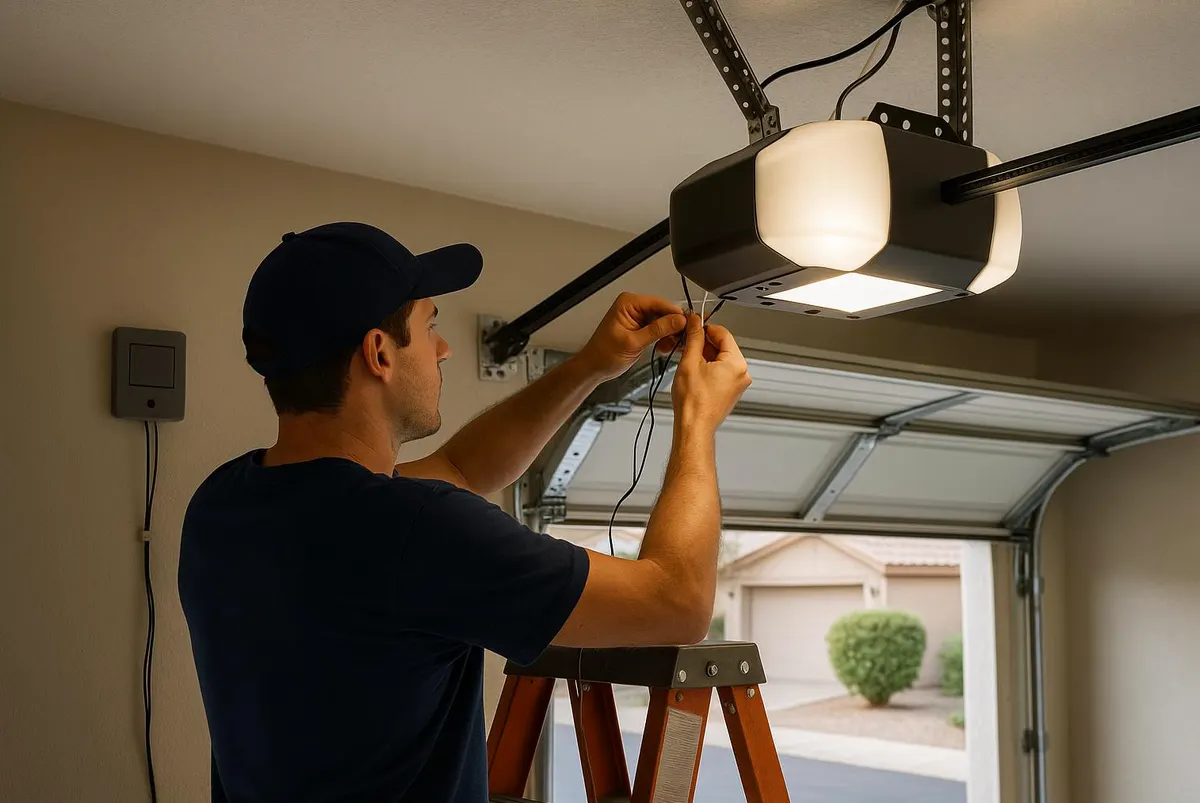
The Mistake Most Homeowners Make First
Someone backs a car into the garage door, or a wind-driven branch cracks a panel, and the first instinct is almost always the same: just replace that one section. It feels like the obvious fix. A dented fender on a car gets swapped out without touching the rest of the vehicle, so why would a garage door be any different? It's also the answer most people want to hear, because it sounds faster and cheaper than buying a whole new door.
Sometimes that instinct is exactly right. But garage doors aren't built quite like cars, and the single-panel fix has some real limitations that don't show up until you're a few phone calls into trying to source the part.
Why Panel Replacement Isn't Always Simple
A garage door is made of sections that are matched in color, texture, and sometimes insulation value. If your door has spent several summers facing direct sun in Kings County's hot, dry inland heat, the painted finish on the existing panels has likely faded or chalked slightly. A brand-new replacement panel, even from the same manufacturer, can look noticeably different right next to the older ones. That mismatch is permanent unless the whole door gets repainted or replaced.
There's also an availability problem. Garage door styles get discontinued, and manufacturers change their panel profiles every few years. If your door is more than a decade old, the exact matching panel may simply not exist anymore. Ordering a single custom panel, when it's even possible, often costs more per square foot than you'd expect, and shipping delays can leave your garage with a tarp or plywood patch for weeks.
Side-by-Side: Panel Replacement vs. Full Door Replacement
Cost
- Panel replacement: Generally the cheaper option upfront, often a few hundred dollars depending on the material and whether the panel is insulated.
- Full door replacement: A bigger investment, typically ranging from the low thousands to several thousand dollars depending on material, insulation, and window options.
Time
- Panel replacement: Can sometimes be done same-day if the part is in stock locally; otherwise you're waiting on a special order.
- Full door replacement: Usually scheduled a few days to a couple of weeks out, but once it starts, installation itself is often completed in a single day.
Appearance
- Panel replacement: Risk of visible color or texture mismatch, especially on sun-faded doors.
- Full door replacement: Uniform look, and a chance to upgrade style, color, or window inserts to match current curb appeal.
Energy Efficiency and Insulation
- Panel replacement: Keeps the existing door's insulation rating (or lack of it) unchanged.
- Full door replacement: Opportunity to move to an insulated door, which helps during both hot inland summers and the damp chill of winter rain season, especially if the garage shares a wall with living space.
Structural and Safety Considerations
- Panel replacement: Fine if the rest of the door, track, rollers, and springs are in good shape and the frame wasn't bent in the impact.
- Full door replacement: The better choice if there's also track misalignment, a bowed section, or if the door predates current hardware standards and could use reinforcement, which matters more here given the earthquake retrofit considerations common in older Kings County homes.
Long-Term Value
- Panel replacement: Smart short-term fix that extends the life of a door that's otherwise sound.
- Full door replacement: Better long-term value if the door is already past 15-20 years old, since you'd likely be facing spring, opener, or hardware issues soon anyway.
What We'd Recommend for Most Homes Here
If your door is under roughly eight to ten years old, the damage is limited to one panel, the rest of the hardware checks out, and the manufacturer still makes a matching panel, a single-panel repair is usually the right call. It's cost-effective and gets your garage back to normal quickly.
If the door is older, already showing wear on multiple panels, the finish has faded unevenly from years of sun and dust exposure, or you're dealing with an opener and springs that are also nearing the end of their service life, a full door replacement tends to be the better investment. You avoid throwing money at a patch that will look mismatched and still need more repairs within a year or two.
There's a middle case worth mentioning too: double-wide doors where only one of several panels is damaged. On these, replacing just the affected panel is almost always worth trying first, since the cost difference compared to a full door is larger and the mismatch is less noticeable across a wider surface.
When to Call Lemoore Door & Opener
If you're staring at a dented or cracked panel and aren't sure which way to go, it's worth having someone take a direct look rather than guessing from a photo. Our technicians can check whether your door's track, springs, and rollers are still in good working order, confirm whether a matching panel is still available for your door's make and model, and give you a straightforward comparison of repair versus replacement costs for your specific door. We handle both garage door repair for single-panel fixes and full garage door installation when a new door makes more sense, so you're not getting a one-size-fits-all answer.
If you're in Lemoore, Hanford, Armona, or anywhere else around Kings County and need a local garage door technician to take a look before winter rains set in, give Lemoore Door & Opener a call. We'll help you figure out the right fix for your home, not just the fastest one.