
The Mistake: Waiting for the First Rain to Think About It
Most homeowners don't think about their garage door until the first real storm rolls through and something goes wrong — a seal that lets water in, an opener that suddenly hesitates, a door that feels heavier than it did in August. It's an easy mistake to make, because a dry Central Valley summer doesn't punish neglect. Nothing swells, nothing rusts, nothing sticks. The door just works, day after day, so there's no obvious moment to stop and check it. The problem is that all that dry heat and dust has been quietly wearing on rubber, hardware, and electronics the whole time, and the first cold, wet morning is when it all shows up at once.
Why the Dry-to-Wet Switch Is Hard on a Garage Door
Lemoore and the surrounding Kings County area go from hot, dry stretches with dust and wildfire smoke to winter rain fairly quickly, and that swing is tougher on a garage door than steady weather in either direction. Rubber seals that baked in summer sun get brittle and start to crack. Dust that settled into tracks and rollers all season turns into grime the first time it gets wet. Metal hardware that's been dry for months meets humidity and condensation for the first time in a while. None of this is dramatic on its own, but it adds up, and it's why late fall is the right time to go over the door before the weather actually changes.
Weatherstripping and Seals
Walk around the door and press on the rubber seal along the bottom and the weatherstripping along the sides. If it's stiff, cracked, or doesn't spring back when you release it, it's not going to keep winter rain out. A worn bottom seal is one of the most common reasons water ends up pooling just inside the garage during the rainy season, and it's also one of the cheapest fixes if you catch it now instead of after a storm.
Springs and Hardware
Garage door springs are under constant tension, and temperature changes affect how they behave. A door that's been fine all summer can suddenly feel heavier or move unevenly on a cold morning. Check that the door opens and closes smoothly and evenly on both sides. If you see gaps in the coils, rust starting to form, or the door seems to jerk partway through its travel, don't try to adjust the spring yourself — it's one of the most dangerous repairs in the house. Also take a minute to check visible bolts, hinges, and the track brackets for rust or looseness; months of dust followed by moisture is exactly when hardware starts to corrode.
Tracks and Rollers
Dust from a dry summer, especially during smoke-heavy stretches, builds up inside the tracks and on the rollers even if you can't see it from the floor. Wipe the tracks down with a damp cloth and check that rollers spin freely rather than scraping or sticking. A light garage-door-specific lubricant on the rollers and hinges (not a household spray) will help them move smoothly once rain adds moisture back into the mix.
The Opener and Safety Sensors
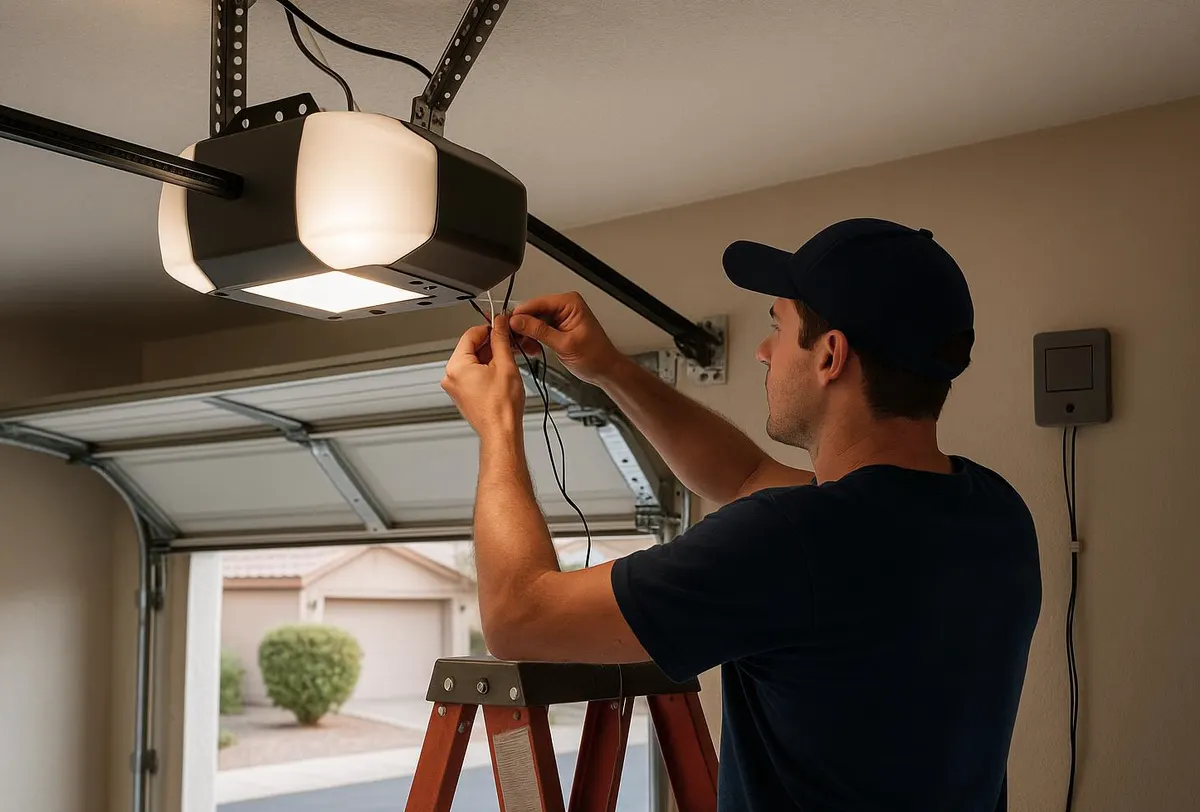
Cold, damp mornings are when opener issues tend to show up — a remote that used to work every time now takes two or three tries, or the door reverses for no clear reason. Wipe down the photo-eye sensors near the bottom of the tracks, since dust from summer can coat them and cause erratic behavior once humidity rolls in. Test the auto-reverse safety feature by placing a block of wood in the door's path and making sure it stops and reverses.
A Quick Seismic Check While You're At It
If your garage has ever had an earthquake retrofit, or if you've never had the bracing checked, late fall maintenance is a good time to glance at the wall bracing and track anchors while everything else is already open for inspection. Loose anchor bolts are easy to miss during a normal year but worth catching before winter weather adds more strain to the system.
A Simple Pre-Winter Checklist
- Inspect and, if needed, replace bottom seal and side weatherstripping
- Check spring coils and hardware for rust, gaps, or looseness
- Clean tracks and lubricate rollers and hinges
- Wipe down and test the opener's safety sensors
- Run the auto-reverse safety test
- Glance at wall bracing and anchor bolts if you have seismic retrofitting
When to Call Lemoore Door & Opener
If the door is uneven, the springs look worn, or weatherstripping is too far gone to just patch, that's where a local garage door technician in Lemoore makes the difference between a quick fix and a bigger repair once the rain starts. Lemoore Door & Opener handles seasonal garage door maintenance tune-ups — checking balance, hardware, and seals — as well as spring replacement when coils show real wear rather than just cosmetic rust. Catching a spring that's close to failing now, before cold mornings add extra strain, is a lot easier than dealing with a door that won't open during a storm.
If your garage door needs a pre-winter once-over, Lemoore Door & Opener serves Lemoore, Hanford, Armona, Corcoran, and the rest of Kings County — give us a call and we'll get your door ready for the rain.